I’m designing a LED driver, and for that I want to measure the current running through my LED string.
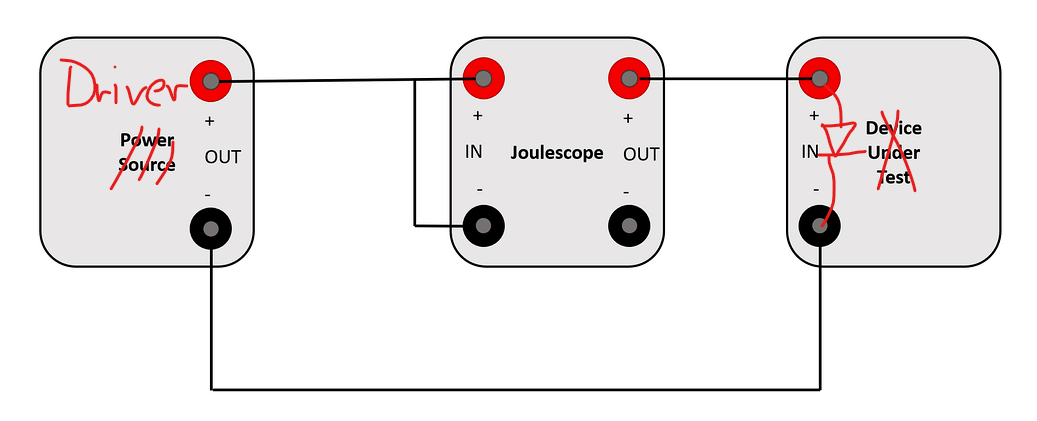
I’ve hooked the Joulescope up in “only current” mode, with IN+ and IN- shorted together, connected to the positive LED terminal. OUT+ is connected to the anode of the LEDs.
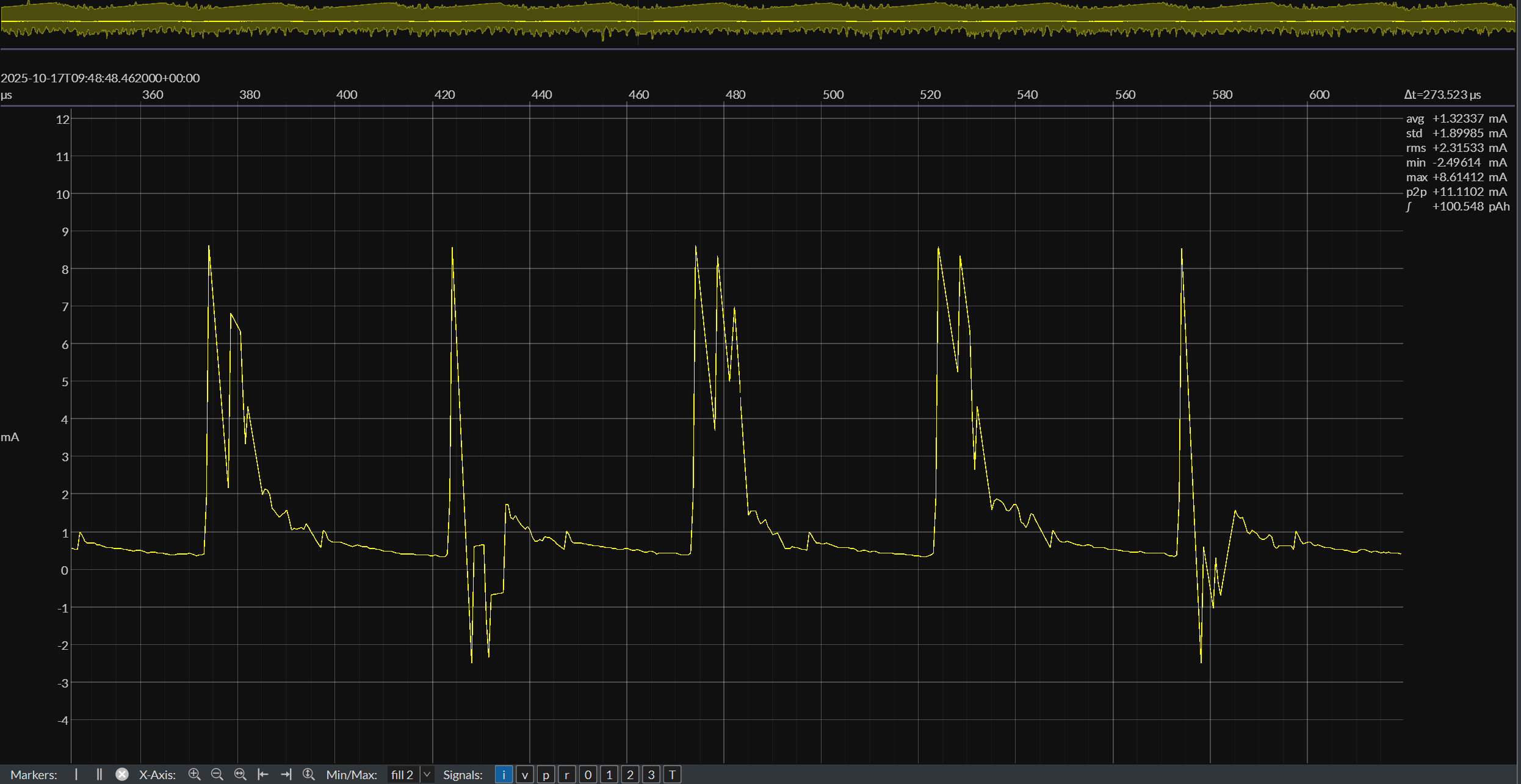
My issue: The joulescope seems to be measuring values which can’t be correct. I get negative currents, which is not possible because I’m in an LED string:
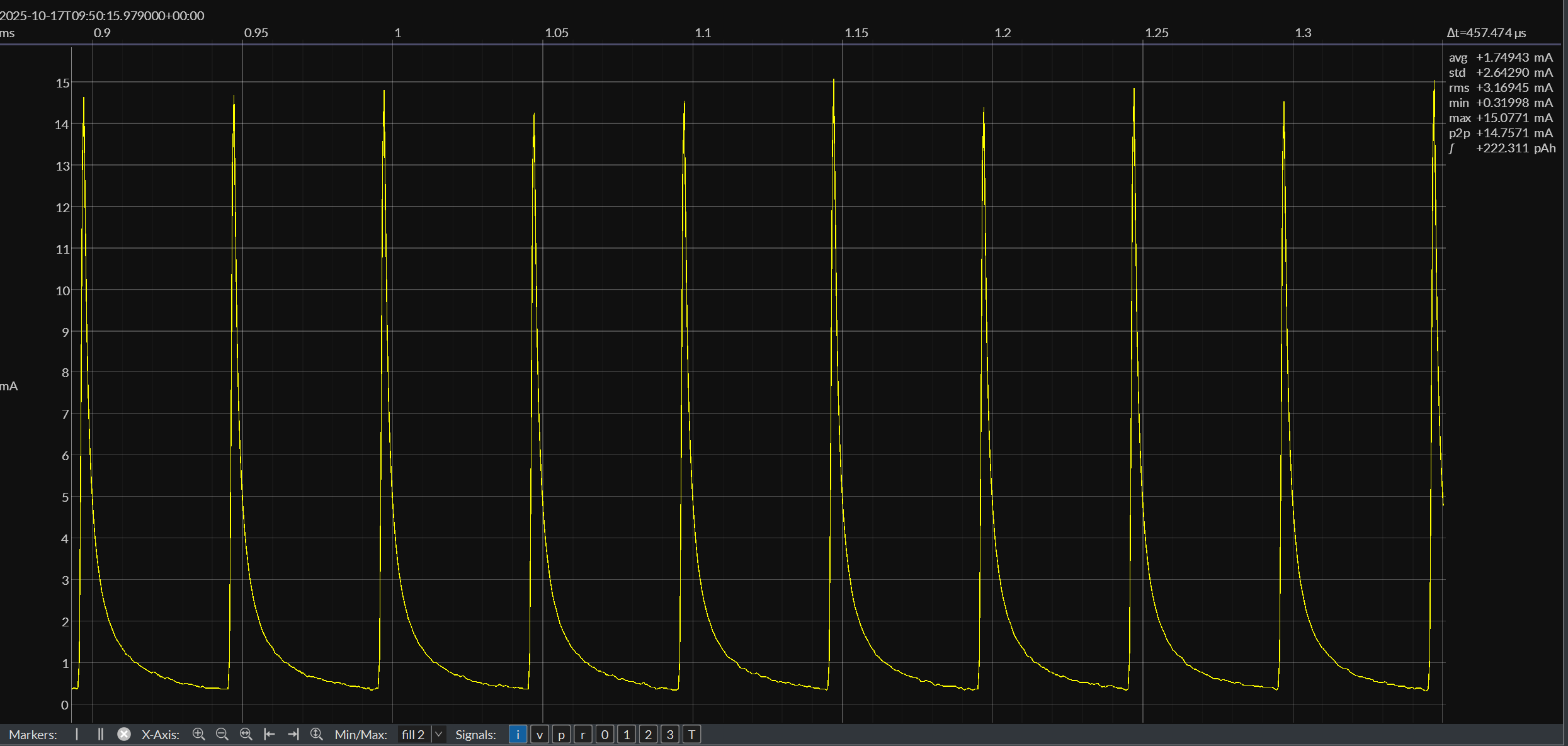
At a slightly lower duty cycle, it looks more correct:
If I hook the Joulescope in the 24V between my lab power supply and the LED driver, everything works. It just seems that it can’t work in an LED String. Anyone a explanation for that?
Hi @schlijo and welcome to the Joulescope forum!
The drawing shows a Joulescope with IN and OUT terminals, which are the JS110 connections. The JS220 uses Voltage and Current terminals.
- Can you confirm that you are using a Joulescope JS110?
Joulescope autoranging can produce very brief transients due to MOSFET charge injection and the rapid change in shunt impedance when it selects a new shunt resistor. We made significant improvements to the JS220 to measure through these changes, while the JS110 is “blind” for about 5 microseconds.
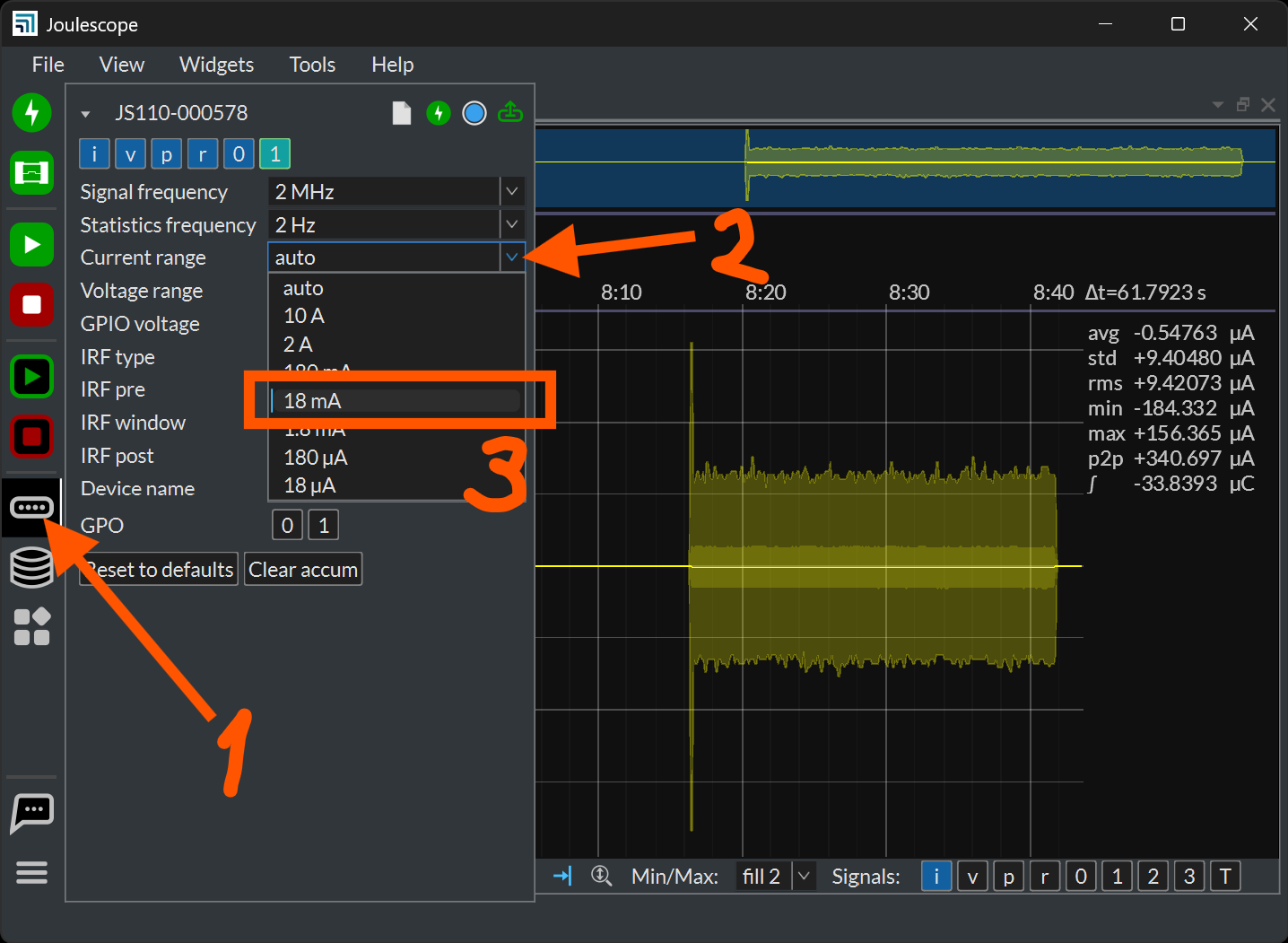
For your measurement, it looks like you don’t even need autoranging. It looks like you can specify a fixed 18 mA range, like this:
- Does selecting a fixed current range help you capture a cleaner waveform?
Hello @mliberty,
sorry, forgot to specify: Yes, I’m using the JS110.
Thank you a lot, switching off the auto range did the trick. My signal switches very swiftly between zero and 350mA, it seems the auto switching got confused by that.